
Summer might be in full swing, but it’s certainly not the time to put your HR on holiday mode.
From unexpected weather disruption to changing employment legislation and the growing role of AI in the workplace, there are plenty of topics for you to keep on your radar.
We’re also sharing why it’s a good idea to have a plan in place before adverse weather strikes, and taking a look at the Government’s Make Work Pay employment rights roadmap for unpaid carers and parents of seriously ill children. Not only that, but we’re also exploring the important role HR plays in helping businesses use AI confidently, responsibly and effectively.
As always, if you need a helping hand with any HR challenge, we’re here and happy to help.

Feelin’ hot, hot, hot!
We’ve had a few spells of seriously hot weather recently, including rare red extreme weather warnings, which have no doubt had a big effect on your business and employees. There are a range of HR issues to consider when it comes to adverse weather and having plans in place before it happens is good practice.
For starters, you could look at how you adjust the working environment so it is beneficial to employee health, wellbeing and morale. Different ways to make employees more comfortable could include:
- Change the dress code to make it weather appropriate
- Provide desk, pedestal or ceiling-mounted fans
- Provide air conditioning
- Ensure there is adequate ventilation
- Ensure windows can be opened to keep air circulating
- Position workstations away from direct sunlight and heat sources
Insulate sources of heat such as hot water piping - Provide cold water dispensers, etc.
It’s also an idea to put together a Severe Weather policy, which details everything employees need to know should the weather take a turn, including:
- How the business will communicate updates, closures, or changes to working arrangements
- How pay is affected if employees can’t get into work due to adverse weather
- Expectations around making up lost time, taking annual leave, or unpaid leave where applicable
- Any health and safety measures employees should follow during periods of extreme heat or severe weather.
While we can’t control the weather, we can be prepared for it, and this goes for cold spells, as well as hot.
If you’d like support reviewing your existing policies or creating a Severe Weather policy tailored to your business, we’re here to help.
Business Growth award!
We’re incredibly proud to have received the Business Growth Excellence Award at a fantastic business event hosted by Elite at Leigh Court last week.
This award recognises an amazing achievement – tripling our business in just three months.
While awards are wonderful, this one truly reflects the dedication, passion, and hard work of the incredible team behind Chime HR. I’m so grateful to work alongside such talented people who go above and beyond every day to support both our business and our clients.
A huge thank you also goes to our fantastic clients. Your trust, loyalty, and continued support mean everything to us. Without you, Chime HR simply wouldn’t be what it is today, and we’re grateful to be part of your journey.
Here’s to continued growth, stronger partnerships, and helping even more businesses succeed. Thank you to everyone who has been part of this achievement!


What rights to leave do working parents of seriously ill children have?
There are currently three million unpaid carers balancing their careers with caring responsibilities. Many of them are often forced to reduce their hours, delay returning to employment or even leaving the workforce entirely.
As part of the Government’s ‘Plan to Make Work Pay’ and ‘Next Steps to Make Work Pay’, it committed to review the implementation of carer’s leave and assess whether the current entitlement needs to change.
When passing the Employment Rights Act 2025 into law, it also committed to review the employment rights of parents of seriously ill children.
The Government launched its consultation, Make Work Pay: employment rights for unpaid carers and parents of seriously ill children, on June 9, 2026.
This consultation is open until September 1, 2026 and we look forward to bringing you any news and updates once the consultation date has closed. In the mean time, what are the existing entitlements for parents?
- Neonatal care leave – employees have the right to take up to 12 weeks of leave, paid subject to eligibility rules, if their baby requires neonatal care. Eligible employees include the baby’s parent, intended parent, or the partner of the child’s mother, as well as adopters or their partners.
- Parental leave – Employees have the right to take up to 18 weeks (limited to a maximum of 4 weeks per year) of unpaid parental leave for the purposes of caring for a child. It is a day one right and applies to each child under 18 years of age.
- Carer’s leave – employees may qualify for up to five days of unpaid carer’s leave per year to care for a dependant with a long-term care need, which is defined as lasting for more than three months.
Working parents of seriously children already have access to some time off with their children, but it is for the most part unpaid (ie parental and carer’s leave) and it is only for a limited time.
Welcome to the team, Lulu!
We’re thrilled to have recently welcomed Lulu to the team. She is already getting stuck in and working with our clients, while also bringing her valuable administration and bookkeeping experience to help keep the financial side of the business running smoothly.
When she’s not at work, Lulu is a proud mum to two grown-up children. You’ll often find her out walking her dog, Bella, listening to music, or indulging in her love of animals.
We’re thrilled to have Lulu on board and look forward to the knowledge, enthusiasm, and experience she brings to the team.

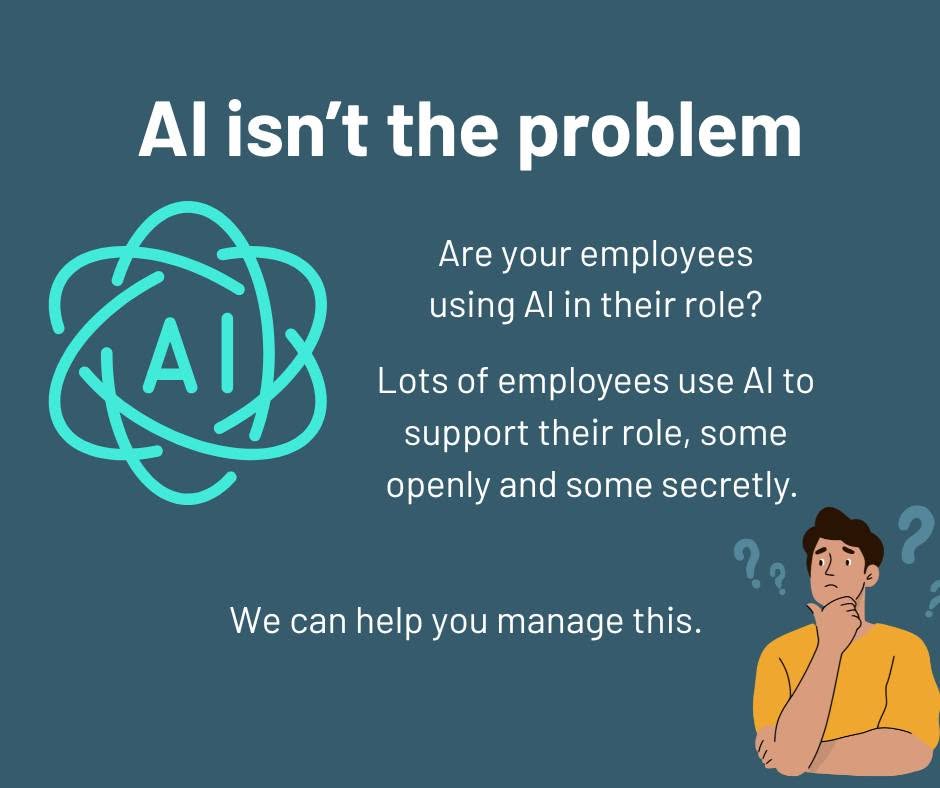
How is your workplace approaching the use of AI?
Research suggests that employees who use AI are often perceived as less hardworking, even when they achieve the same, or even better, results. As a result, many people feel they need to hide their use of AI instead of learning how to use it effectively and responsibly.
This is where HR has an important role to play.
As a business owner, putting the right frameworks in place means you can embrace AI while ensuring employees are treated fairly. This includes:
- Creating clear policies on how AI should be used
- Defining what effective and responsible AI use looks like for each role
- Training managers to understand both the benefits and limitations of AI
- Recognising outcomes, accountability and innovation, rather than simply rewarding time spent on a task
- Encouraging an open culture where employees can share ideas, experiences and AI best practices.
The future of work is not about whether employees use AI, it’s about making sure everyone is assessed fairly when they do.
If you need help or guidance on creating an AI policy for your business, please get in touch.
As always…
As always, further information on any of the above will be provided as soon as available, but in the meantime if you need any help with your Employment Contracts or Contractor Contracts, please do not hesitate to contact us at Chime HR, where we make your company legally shine!