
October is here, and while spooky season might bring thoughts of ghosts and ghouls, there are some workplace surprises that are best avoided!
From making sure managers feel confident when supporting employees with disabilities, to checking that your HR documents are up-to-date, there are plenty of areas where small gaps can quickly become bigger problems.
With World Mental Health Day taking place on 10 October, it’s also a timely opportunity to think about how well you are supporting the mental health and wellbeing of your employees. And with more people working from home or in hybrid roles, it’s important to consider whether your approach to managing and monitoring remote staff is still working effectively.
In this month’s newsletter, we’re looking at some of the areas of HR that can sometimes feel like a haunted house full of surprises, and sharing practical advice to help you avoid any scary compliance mistakes.

Are your managers confident with dealing with disability at work?
A recent poll has revealed that 7 in 10 employers have failed to train their managers on disability discrimination or staff on neurodiversity.
This is an important reminder that you need to understand how to respond appropriately when an employee has a disability or develops one. From recognising when reasonable adjustments may be needed to understanding how absence, performance or conduct issues could be linked to a disability, getting the approach wrong can leave a business exposed to discrimination claims.
You don’t need a huge HR department to get this right, but you do need the right knowledge and processes in place. Making sure managers know what to look out for, when to have supportive conversations and when to seek HR advice can make a big difference.
Could your managers benefit from a refresher on disability and reasonable adjustments? It may be time to review your training and make sure they feel confident handling these situations.
Are your HR documents up-to-date?
HR documents aren’t something you can simply create once and forget about.
Employment legislation, best practice and your business needs can all change over time.
Not sure where to start? We can review your HR documentation to make sure it’s clear, compliant and tailored to your business.
Why work with us?
- Trained HR specialists
- Years of practical HR experience
- Up-to-date knowledge of HR legislation, rules and guidance
- Documents tailored to your business and your people
- A fresh, expert pair of eyes to spot gaps, inconsistencies and areas for improvement.
Don’t wait until an HR issue highlights a gap in your documentation.


How are you supporting your employees with their mental health?
With World Mental Health Day taking place on 10 October, it is a good opportunity for you to consider how well you are supporting the mental health and wellbeing of your employees.
Poor mental health can have a significant impact on an individual, at work and beyond, and if sufficiently serious it can meet the definition of disability under the Equality Act 2010.
As an employer, you have a duty of care to those you employ to ensure their health, safety and welfare. This requires you to take action to prevent or tackle any risks to your employees’ physical or mental health, such as workplace stress, to stop those risks leading to physical and/or poor mental health.
Regardless of whether the employee would be classed as disabled or not, you should consider what support you can give to an employee who tells you that they are experiencing poor mental health, eg depression or anxiety.
Suggestions for supporting employees suffering with poor mental health:
- Provide training for managers on identifying mental health issues and the ways to support employees who are struggling with them
- Implement Employee Assistance Programmes (EAPs)
- Conduct mental health awareness initiatives
- Make reasonable workplace adjustments
- Promote positive mental wellbeing through supportive policies and practices.
Employees working remotely?
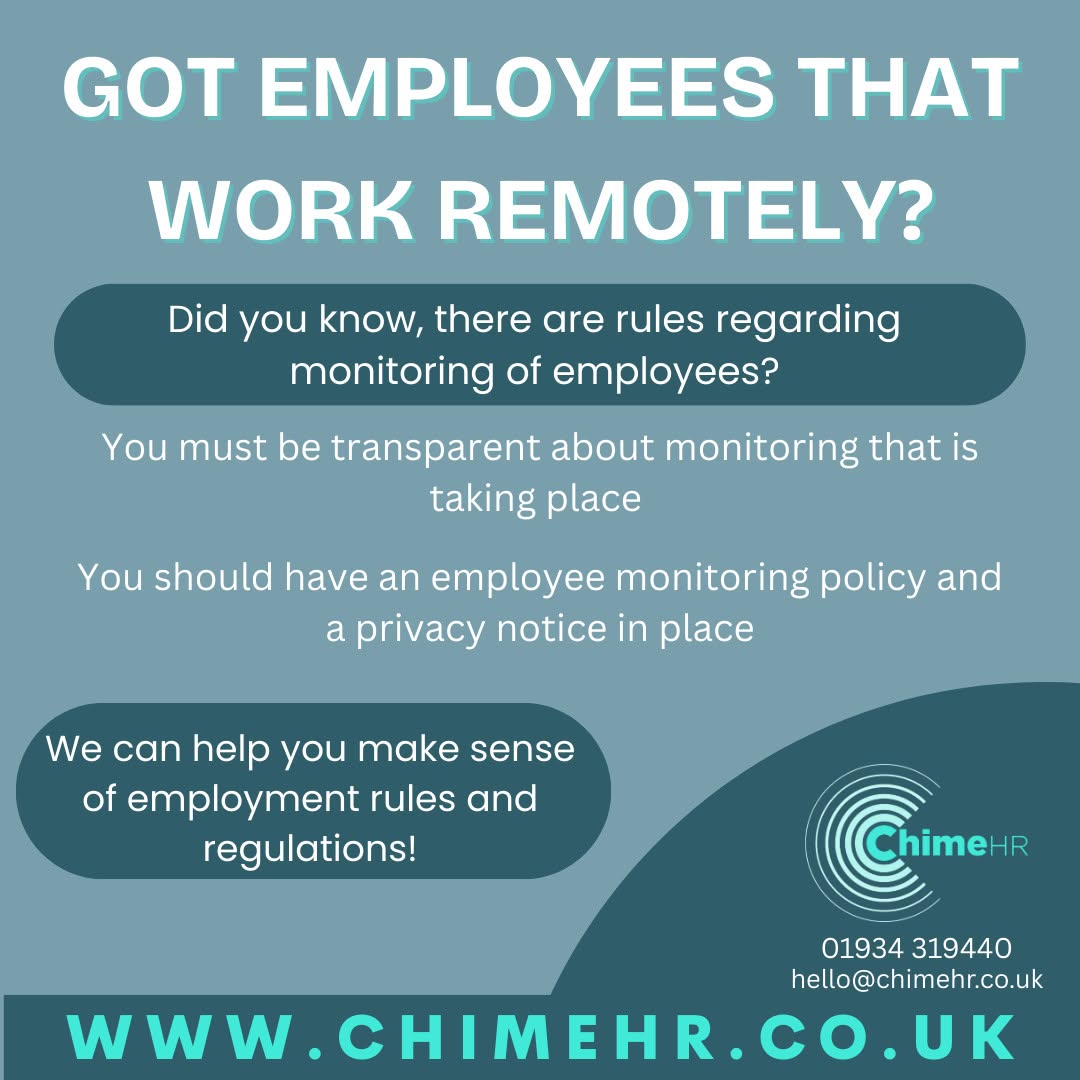
With more people than ever working from home or in hybrid roles, it’s important to think carefully about how you manage and monitor remote staff.
While technology makes it easy to track productivity, attendance, and online activity, you have a legal and ethical responsibility to be upfront with your team.
As an employer, you must be transparent about any monitoring that takes place. This includes being clear on what is being monitored, why it is necessary, and how the information will be used. Ideally, you should have:
- An Employee Monitoring Policy – setting out what monitoring is in place, how it works, and what employees can expect.
- A Privacy Notice – ensuring compliance with data protection law and providing clarity on how personal data is collected, stored, and used.
Getting this wrong could not only damage trust but also put you at risk of breaching employment or data protection laws.
The good news is, we can help you put the right policies and processes in place to protect both your business and your people.
HR doesn’t have to be a nightmare
From spooky workplace rumours to scary compliance mistakes, HR can feel like a haunted house full of surprises.
But, with the right policies and advice, you can keep the skeletons in the closet where they belong.
Whether it’s avoiding a trick, or ensuring your team gets the treat of a fair, safe workplace, we’re here to help.
As always, we are here to help and advise.
As always…
As always, further information on any of the above will be provided as soon as available, but in the meantime if you need any help with your Employment Contracts or Contractor Contracts, please do not hesitate to contact us at Chime HR, where we make your company legally shine!